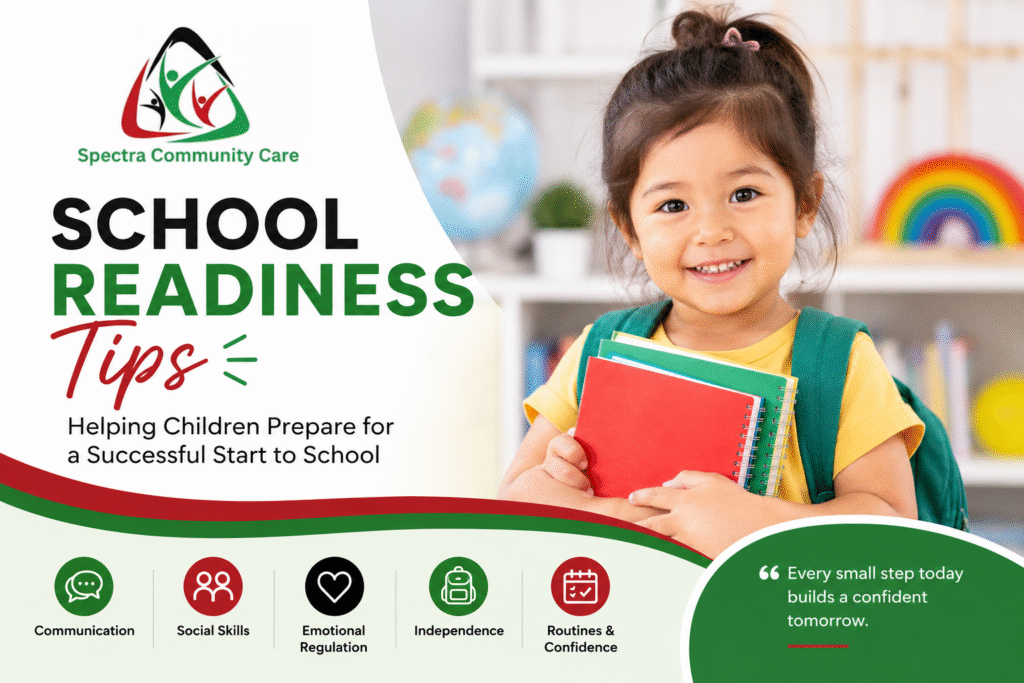
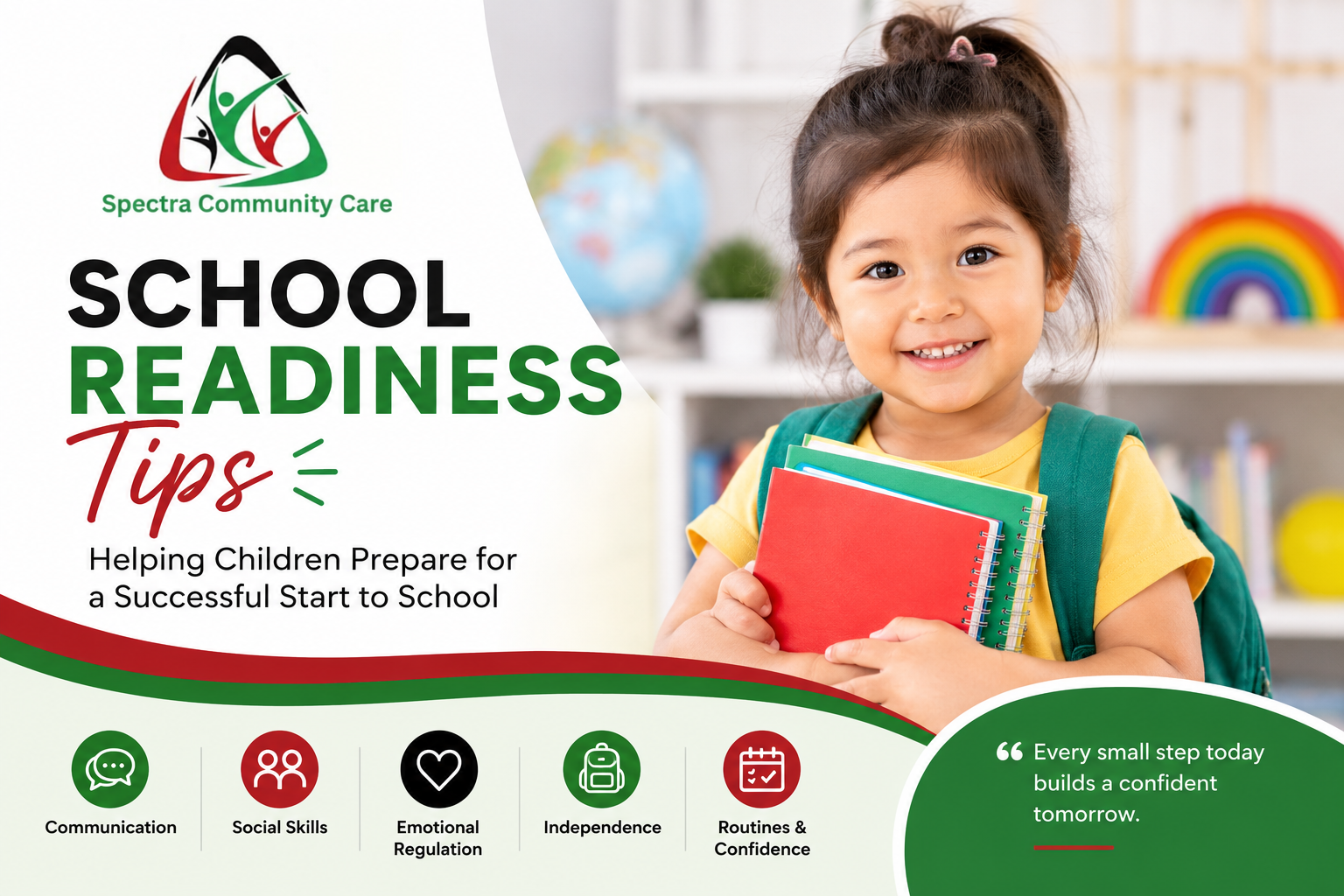
School Readiness Tips for Parents: Helping Children Prepare for a Successful Start to School
Educational resource from Spectra Community Care providing school readiness tips for parents, including communication skills, social development, emotional regulation and independence skills for children preparing to start school.
Introduction
Starting school is a major milestone in a child’s life. Many parents wonder whether their child is truly ready for school and what skills can help them make a successful transition.
School readiness is about much more than recognising letters, numbers and colours. It includes communication skills, emotional regulation, social development, independence and confidence in everyday situations.
Children develop at different rates, and school readiness focuses on helping each child build the skills needed to participate, learn and thrive within the school environment.
This guide explores school readiness, key skills children may benefit from developing and practical ways families can support a positive transition to school.
What Is School Readiness?
School readiness refers to the skills, knowledge and behaviours that help children participate successfully in a school environment.
Being school ready does not mean a child must be able to read, write or complete advanced academic tasks before starting school.
Instead, school readiness often includes a combination of:
Communication skills
Social interaction skills
Emotional regulation
Independence in daily activities
Ability to follow routines
Confidence in new environments
Developing these skills can help children feel more comfortable, engaged and prepared when they begin their educational journey.
Why Is School Readiness Important?
Research consistently shows that early childhood experiences play an important role in long-term learning, wellbeing and participation.
Children who enter school with strong communication, social and self-help skills are often better able to:
Participate in classroom activities
Build positive relationships
Follow instructions
Express their needs
Manage emotions
Adapt to new routines
School readiness helps create a strong foundation for future learning and development.
Key School Readiness Skills
Communication Skills
Communication is one of the most important aspects of school readiness.
Children benefit from being able to:
Express needs and preferences
Understand simple instructions
Ask for help
Participate in conversations
Listen to others
Communication skills support learning, friendships and participation throughout the school day.
Social Skills
School introduces children to new friendships and group learning experiences.
Important social skills may include:
Sharing
Taking turns
Playing cooperatively
Respecting personal space
Building positive relationships
Strong social skills can help children feel connected and confident in their school environment.
Emotional Regulation
Children encounter many new experiences when starting school.
Emotional regulation helps children:
Manage frustration
Cope with change
Handle disappointment
Follow classroom expectations
Build resilience
Supporting emotional development can make transitions smoother and less stressful.
Independence and Self-Care Skills
Children often benefit from developing practical independence skills before starting school.
Examples include:
Toileting independently
Washing hands
Managing lunchboxes
Packing belongings
Putting on shoes and jackets
These skills help children participate more confidently throughout the school day.
Following Routines and Instructions
School environments involve structured routines and group activities.
Children benefit from learning how to:
Follow simple instructions
Transition between activities
Participate in routines
Stay engaged during group tasks
These skills support participation and classroom success.
How Parents Can Support School Readiness
Parents and caregivers play a significant role in preparing children for school.
Practical strategies include:
Read Together Daily
Reading supports language development, communication and early literacy skills.
Encourage Independence
Provide opportunities for children to practise self-care and everyday tasks.
Create Consistent Routines
Predictable routines help children develop confidence and understand expectations.
Support Social Opportunities
Playgroups, community activities and childcare settings can help children build friendships and social confidence.
Encourage Communication
Create opportunities for conversation, storytelling and asking questions.
When Additional Support May Help
Some children may benefit from additional support when preparing for school.
Families may consider seeking guidance if they have concerns regarding:
Communication development
Social interaction
Emotional regulation
Attention and participation
Developmental milestones
Learning and behaviour
Early support can help children build important skills and confidence before starting school.
How Spectra Community Care Can Help
At Spectra Community Care, we understand that every child develops differently.
Families seeking support may benefit from learning more about our Early Childhood Intervention Services:
Our focus is on supporting children and families through person-centred and family-focused approaches that promote confidence, participation and development.
Final Thoughts
School readiness is about helping children develop the skills and confidence needed to participate successfully in school and everyday life.
By supporting communication, social skills, emotional regulation and independence, families can help children build strong foundations for future learning and wellbeing.
If you would like guidance regarding child development, early intervention or school readiness support, please contact Spectra Community Care: